Trump Slaps 50% Tariffs on Canada, Escalates Trade War
Trump Slaps 50% Tariffs on Canada, Escalates Trade War
By Divine Macaulay ·
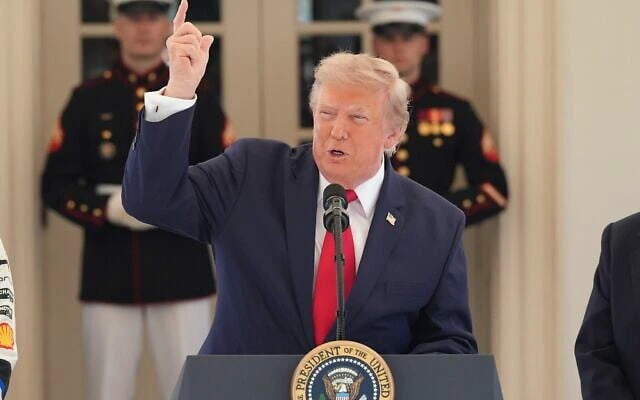
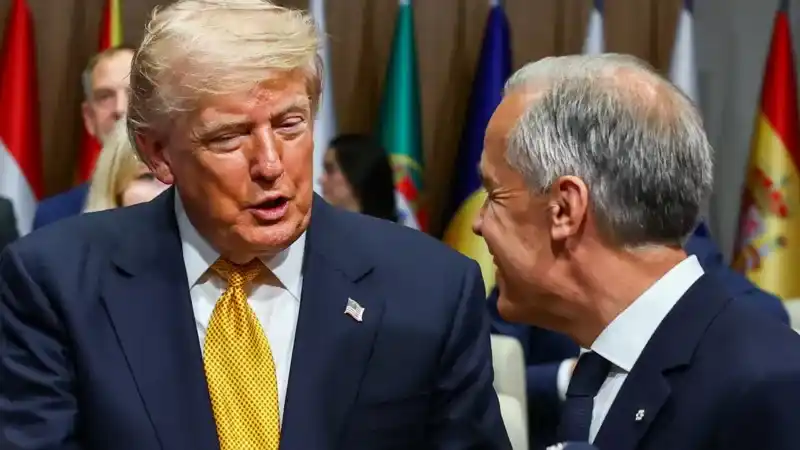
The trade dispute between the United States and Canada intensified on Monday after President Donald Trump imposed a 50 percent tariff on a broad range of Canadian imports, prompting Prime Minister Mark Carney to pledge renewed efforts to secure a negotiated settlement.
The White House said the new duties, which will take effect in 30 days, target products ranging from consumer goods such as wine and hockey sticks to industrial materials including cement. However, strategic exports such as energy, potash, critical minerals and fish have been exempted.
The latest move marks a significant escalation in tensions between the two North American allies, whose trade relationship has come under increasing strain since Trump returned to office.
Responding to the announcement, Carney said Canada was prepared to "intensify" trade negotiations with Washington in the coming weeks while condemning the tariffs as another unilateral action that undermines the United States-Mexico-Canada Agreement (USMCA).
"This is the latest in a series of unilateral US trade actions that began with the US imposing tariffs in direct violation of the Canada-United States-Mexico Agreement," Carney said in a statement posted on X.
He also referenced what he described as threats to Canadian sovereignty, an apparent response to Trump's repeated remarks suggesting Canada should become the 51st US state.
The new tariffs follow months of retaliatory measures between the two countries. Canada had earlier imposed a 25 percent levy on about C$30 billion worth of US goods in response to previous American tariffs, although Ottawa later eased some of those measures while maintaining duties on US automobiles, steel and aluminium.
Trump justified the latest action by accusing Canada of unfair trade practices, particularly in the automotive, dairy and alcohol sectors.
The administration argues that Canada's taxes on certain US-made vehicles not covered by the USMCA discriminate against American manufacturers, while its supply-managed dairy system imposes tariffs exceeding 300 percent on imports above quota limits. Washington has also criticised the continued boycott of US alcoholic beverages by several Canadian provinces.
The latest measures add to existing US tariffs of between 15 percent and 50 percent on Canadian steel, aluminium and copper, as well as a 35 percent duty on softwood lumber and a 25 percent tariff on non-US components used in automobiles.
Although Trump recently threatened additional tariffs over wildfire smoke drifting from Canada into US cities, the executive orders signed on Monday make no reference to the issue, instead focusing on long-standing trade grievances.
The decision also comes after the US declined to renew the USMCA in its current form. While Canada and Mexico sought an extension of the agreement, Washington has insisted on renegotiating key provisions. The treaty remains in force under its rolling review mechanism.
Unlike previous tariffs that were struck down by the US Supreme Court after being imposed under emergency powers, the new duties rely on Section 338 of the Tariff Act of 1930, a rarely used provision addressing alleged discriminatory trade practices.
Business groups on both sides of the border expressed concern over the escalating dispute.
Candace Laing, president of the Canadian Chamber of Commerce, described the tariffs as a "regrettable decision" and urged negotiators to reach meaningful progress before the measures take effect.
Chris Swonger, president of the Distilled Spirits Council of the United States, warned that the move could trigger another round of retaliatory actions, calling on both governments to reach a negotiated resolution.