Sultan: Don’t Brand Fulani Herders as Criminals
Sultan: Don’t Brand Fulani Herders as Criminals
By Divine Macaulay ·
He argued that describing criminals as "Fulani herdsmen" unfairly stigmatizes millions of law-abiding Fulani people, stressing that criminal responsibility should never be tied to ethnicity.
The Sultan of Sokoto, Muhammadu Sa’ad Abubakar III, has urged Nigerians to stop associating Fulani herders with criminality, insisting that kidnappers, bandits and terrorists should be identified simply as criminals, regardless of their ethnic background.
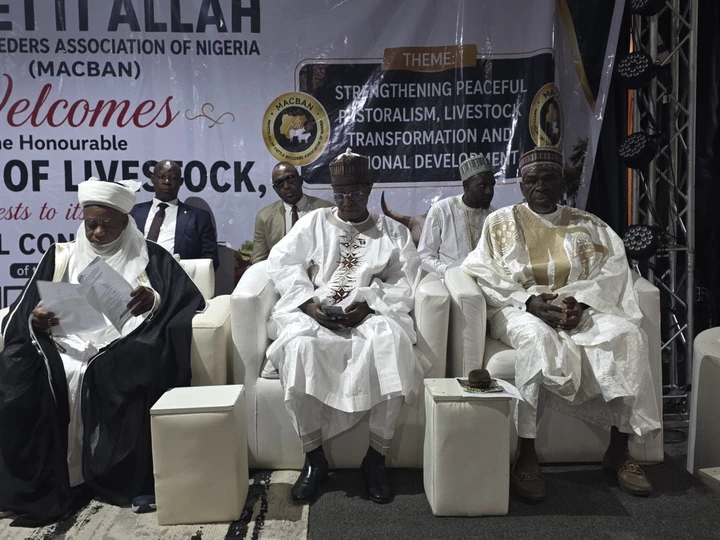
Speaking on Wednesday at the opening of the 2026 National Conference of the Miyetti Allah Cattle Breeders Association of Nigeria (MACBAN) in Abuja, the monarch also pledged the support of Fulani communities in helping security agencies identify and flush out criminal elements operating within their settlements.
"I want to assure all Nigerians that we mean well for everybody in Nigeria. We mean no harm to anybody," the Sultan said.
He argued that describing criminals as "Fulani herdsmen" unfairly stigmatizes millions of law-abiding Fulani people, stressing that criminal responsibility should never be tied to ethnicity.
"Call them criminals who are abducting people, engaging in kidnapping, terrorism and whatever. In every family, you have bad people and you have good people. I happen to belong to the family of good people," he said.
The Sultan assured President Bola Tinubu and security agencies of the readiness of Fulani communities to support efforts aimed at eliminating criminal elements.
"We are 100 per cent ready to work with the President and security agencies to flush out criminals from our enclaves," he added.
He also praised the establishment of the Federal Ministry of Livestock Development, describing it as a landmark initiative that could transform Nigeria's livestock sector. The traditional ruler commended the Presidential Livestock Reforms Committee, chaired by Professor Attahiru Jega, and pledged the backing of traditional institutions for the ministry's programmes.
Calling for stronger national cohesion, the Sultan urged Nigerians to move beyond tolerance to genuine understanding of one another.
"We want everybody to understand who we are. If you understand somebody, you can work better with him," he said.
Earlier, MACBAN National President, Baba Othman Ngelzarma, reaffirmed the association's condemnation of terrorism, kidnapping, banditry, cattle rustling and other violent crimes, insisting that no ethnic group or profession should be judged by the actions of a few criminals.
He described insecurity as the biggest challenge confronting both pastoralists and farming communities, noting that violent attacks had claimed lives, displaced families and destroyed livelihoods across the country.
"Criminals must never be identified with any ethnic group, religion or occupation. Those who violate the law must be dealt with according to the law, while peaceful and law-abiding citizens must be protected without discrimination," he said.
Ngelzarma said MACBAN would continue encouraging its members to provide credible intelligence to security agencies while rejecting criminality in all its forms.
He also identified climate change, desertification, shrinking pastureland, prolonged drought and encroachment on grazing reserves as major threats to livestock production, calling for increased investment in climate-smart livestock systems, pasture development, water infrastructure and sustainable land-use planning.
On the proposed creation of state police, the MACBAN president expressed support for measures to strengthen community security but stressed that any policing system must remain professional, impartial and backed by constitutional safeguards.
He further disclosed that the association had entered strategic partnerships with organisations including ECOWAS, the African Union, the Food and Agriculture Organization (FAO) and the International Meat Processors of the United States to promote technology transfer, improve meat-processing standards and attract investment into Nigeria's livestock industry.
Minister of Livestock Development, Idi Mukhtar Maiha, said the Federal Government was implementing reforms under the National Livestock Growth Acceleration Strategy to modernise livestock production and reduce farmer-herder conflicts.
Maiha announced that 20 modern veterinary hospitals were being constructed nationwide, with seven already completed, while regional vaccine storage facilities capable of holding up to 40 million doses were also under development.
He further disclosed that the National Animal Identification Project would soon commence, with cattle, sheep and goats to be digitally registered, tagged and fitted with microchips to establish ownership, curb cattle rustling and improve Nigeria's access to international livestock markets.
According to the minister, livestock without identification tags would eventually be barred from markets, abattoirs and slaughter facilities.
Maiha also reaffirmed the government's commitment to implementing a national ranching policy, beginning with a pilot project at the Wase Grazing Reserve in Plateau State, describing sedentary livestock production as key to boosting productivity, addressing climate challenges and promoting peaceful coexistence between farmers and herders.
The two-day conference, themed "Advancing Peaceful Pastoralism and Livestock Transformation for Food Security, National Unity and Shared Prosperity," is expected to adopt resolutions on security, livestock reforms, governance, youth and women empowerment, climate resilience and strategic partnerships aimed at strengthening Nigeria's livestock sector.