Seun Kuti Defends Family Legacy in Nepotism Debate: “Even Fela Wouldn’t Have Been Fela Without Funmilayo Ransome-Kuti”
Seun Kuti responded to nepotism accusations by stating that even his father Fela Kuti would not have become the icon he was without the influence of his mother.
By Godwin Adejor ·
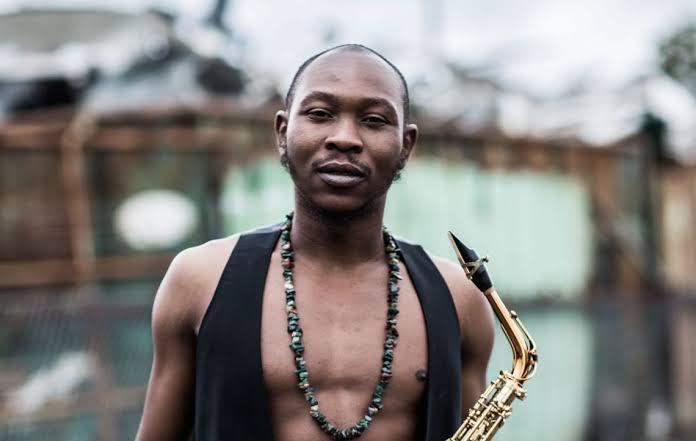
Afrobeat musician Seun Kuti has sparked conversations online after addressing accusations of being a “nepo baby,” highlighting the role of family background in success while defending the Kuti family’s storied legacy.
In a recent interview on Ada’s Room, Seun responded to critics who label him a beneficiary of nepotism due to his father, the legendary Fela Anikulapo Kuti. He pointed to his grandmother, the pioneering activist Funmilayo Ransome-Kuti, as a foundational influence on his father’s iconic status.
“You will see people online calling me a nepo baby, but even Fela Kuti, if he wasn’t Funmilayo Ransome-Kuti’s son, he wouldn’t have been Fela. Nothing comes from nothing,” Seun stated.
Funmilayo Ransome-Kuti (1900–1978) was a trailblazing educator, women’s rights advocate, and political organizer. Often called the “Lioness of Lisabi,” she led mass protests against colonial taxation in the 1940s, fought for women’s suffrage, and played a key role in Nigeria’s anti-colonial movement. Her activism and fearless stance profoundly shaped her son Fela’s revolutionary music and political ideology.
Seun’s comments underscore a broader truth: exceptional individuals often emerge from environments rich in ideas, privilege, exposure, and support — advantages that the Kuti family leveraged across generations. Fela himself built upon his mother’s legacy of resistance, turning it into a global Afrobeat movement that challenged corruption, imperialism, and social injustice.
While embracing the “nepo baby” label to an extent, Seun made it clear that inheritance alone is not enough. “I might be a nepo baby, but my father is not on stage playing my sax for me,” he quipped, stressing the personal effort required to sustain and evolve the family’s musical and activist tradition.
Seun has led Fela’s band Egypt 80 for decades, continuing his father’s politically charged sound while carving out his own voice as an artist and activist. His remarks highlight a nuanced view on nepotism: family connections can open doors, but talent, dedication, and hard work determine whether those doors lead to lasting impact.
The comments have resonated widely in Nigeria and beyond, where discussions about privilege, legacy, and merit frequently dominate social media. Many praised Seun for his honesty and historical awareness, while others engaged in debates about how much success is truly self-made versus structurally supported.
The Kuti family’s story — from Funmilayo’s activism to Fela’s cultural rebellion and now Seun’s continuation — serves as a compelling case study in how generational influence shapes public figures.
Seun Kuti’s candor reinforces that behind every icon is often a powerful foundation — in this case, the formidable legacy of Funmilayo Ransome-Kuti.