PFIPC scandal: Office occupied by controversial council belonged to SGF’s office, HoS tells Reps
PFIPC scandal: Office occupied by controversial council belonged to SGF’s office, HoS tells Reps
By Divine Macaulay ·
PFIPC scandal: Office occupied by controversial council belonged to SGF’s office, HoS tells Reps
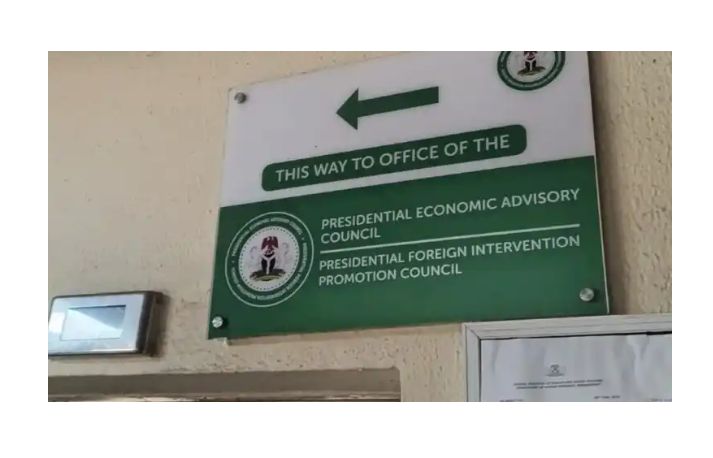
The office space occupied by the controversial Presidential Foreign Investment Promotion Council (PFIPC) at the Federal Secretariat in Abuja was officially allocated to the Office of the Secretary to the Government of the Federation (OSGF), not the Office of the Head of the Civil Service of the Federation (OHCSF), Esther Walson-Jack has told lawmakers.
Walson-Jack made the disclosure on Monday while appearing before the House of Representatives ad hoc committee investigating the PFIPC controversy and the N1.3 billion appropriated to the council in the 2026 Appropriation Act.
The PFIPC has come under intense scrutiny over questions surrounding its legal status, budgetary allocation and operations. The controversy has also drawn in Femi Gbajabiamila, chief of staff to President Bola Tinubu, after Adeniyi Adeyemi, the alleged operator of the council, claimed Gbajabiamila signed his appointment letter—an allegation the presidency has dismissed as false.
The presidency has maintained that the appointment letter bearing Gbajabiamila's signature was forged, while the chief of staff had earlier petitioned security agencies over the matter. Adeyemi was arrested by operatives of the Police Intelligence Response Team (IRT) in Osun State on July 14.
Addressing lawmakers, Walson-Jack said although the PFIPC operated from an office within the Phase III Federal Secretariat, her office neither allocated the space nor authorised its use.
"We can state categorically that the Office of the Head of the Civil Service of the Federation did not allocate any office space to the PFIPC," she said.
She explained that the council wrote to her office on August 6, 2025, seeking approval of its organisational structure. The request was initially declined because the council failed to provide the statutory documents required to establish its legal existence.
According to her, newly created government bodies are expected to submit an establishment Act, an enabling legal instrument or other valid documents before requests relating to organisational structure can be processed.
Walson-Jack further disclosed that during the 2025 workforce projection and human resources exercise, PFIPC officials informed the OHCSF that the council was participating for the first time and was operating with staff seconded from other government agencies.
The council subsequently requested an approved establishment and a recruitment waiver to employ substantive personnel, stating that 14 officials, including its director-general, were already in place.
She said the PFIPC also submitted its director-general's appointment letter and documents indicating that it had been assigned a budget code. Those documents were included in the fourth batch of submissions approved on July 18, 2025, by the permanent secretary overseeing the office during her absence.
'We never deployed staff to PFIPC'
Walson-Jack also denied claims that the Office of the Head of the Civil Service deployed civil servants to the council.
She said although her office received a request for staff deployment to support the PFIPC, it was never approved, stressing that recruitment and staff placement are the responsibility of individual ministries, departments and agencies, not the OHCSF.
HoS admits verification lapses
During the hearing, committee member Hassan Fulata questioned why the OHCSF accepted the PFIPC's documents without verifying the authenticity of its purported enabling Act.
He argued that no government agency should participate in the budget process without valid legal backing and said the documents ought to have been scrutinised in line with the Acts Authentication Act before a budget code was assigned.
In response, Walson-Jack acknowledged deficiencies in the verification process, admitting that officials who initially reviewed the documents were not lawyers and therefore failed to detect that the purported enabling Act was fake.
She said the irregularity only came to light after the controversy over the council's budget allocation prompted her to personally examine the documents.
The Head of Service described the episode as exposing weaknesses in the office's internal processes and said a review of its standard operating procedures is underway.
"We need to have another level of verification. We need to have a lawyer on the team that will receive legal documents so that the lawyer can assess every legal document," she said.
She added that multiple verification layers would now be introduced before legal documents submitted by government agencies are accepted.
"We concede that we didn't do the best we ought to have done in cross-checking those documents at the time they were presented," she said.
Walson-Jack maintained that matters relating to the establishment, supervision and operations of the PFIPC fall outside the statutory responsibilities of the OHCSF and are within the purview of the OSGF and other relevant government institutions.
Also testifying before the committee, Abdullahi Hamisu, director of banking services at the Central Bank of Nigeria (CBN), disclosed that the apex bank opened two foreign currency accounts for the PFIPC on the directive of the Office of the Accountant-General of the Federation (OAGF).
Hamisu said the CBN followed its standard account-opening procedures and did not require an enabling Act to process the request. He added that the accounts were never funded or operated.