Oluwo of Iwo's 'Sons of the Soil' Comment on Fulani Herders Ignites Nationwide Debate
Oluwo of Iwo's 'Sons of the Soil' Comment on Fulani Herders Ignites Nationwide Debate
By Divine Macaulay ·
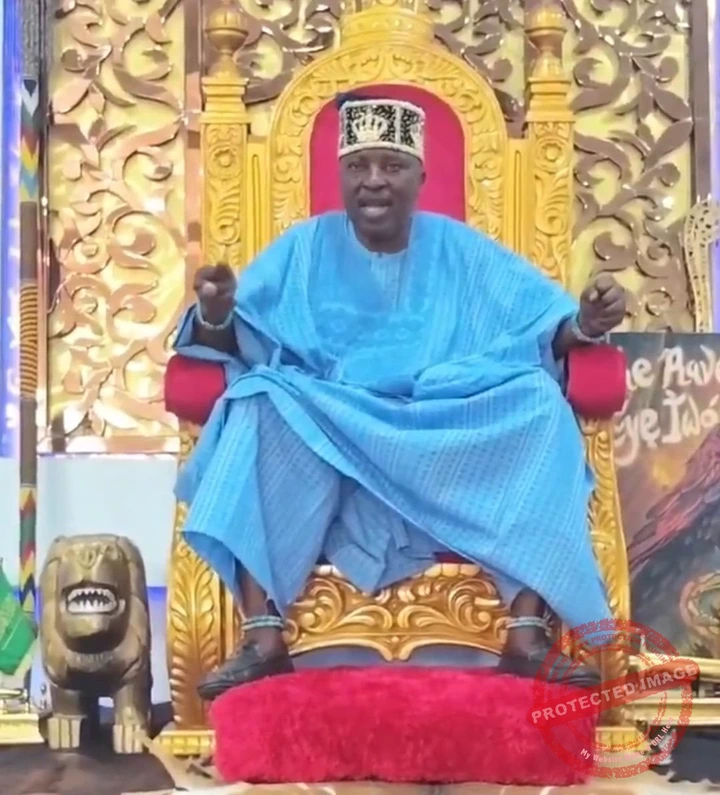
The Oluwo of Iwo, Oba Abdulrosheed Adewale Akanbi, has sparked widespread reactions across Nigeria after describing many Fulani herders residing in Iwo as "sons of the soil," reigniting national conversations on security, ethnic relations, and community integration.
The monarch made the remarks during a security meeting with Fulani herders from Ola-Oluwa Local Government Area of Osun State on June 11. The meeting was convened to strengthen cooperation between residents and herding communities, encourage intelligence sharing, and promote peaceful coexistence amid rising security concerns in different parts of the country.
Addressing participants at the gathering, Oba Akanbi urged residents to avoid stereotyping Fulani herders, insisting that many Fulani families in Iwo have lived in the community for generations and should not be judged based on the actions of a few criminal elements.
"Many Fulani in Iwo are sons of the soil," the monarch stated, emphasizing the need for unity and collaboration in addressing insecurity.
The Oluwo also used the occasion to challenge long-held beliefs surrounding traditional spiritual powers. According to him, individuals who claim to possess extraordinary spiritual abilities should demonstrate their effectiveness by helping to tackle the country's security challenges.
"Anyone who claims there is anything like our forefathers' power or a Babalawo who has mysterious power should come forward and help us address and eliminate the issue of banditry, not just in Yorubaland but in Nigeria, if it is not all a lie," he said.
The comments come at a sensitive period as Nigeria continues to grapple with farmer-herder conflicts and insecurity that have claimed thousands of lives and displaced communities across several states over the past decade.
While some observers view the monarch's engagement with Fulani communities as a pragmatic effort to foster trust, improve intelligence gathering, and promote peaceful coexistence, others argue that his remarks may downplay the concerns of communities affected by insecurity linked to criminal activities involving some herders.
The controversy was further amplified by reports quoting Osun State Governor Ademola Adeleke as criticizing the pace of development in Iwo.
"Iwo is like a village. They don't have any development. Every day their King, Oluwo of Iwo, will be inspecting the road and walking majestically," the governor was quoted as saying.
The governor's alleged remarks added another layer to the ongoing public discourse, with many Nigerians linking Iwo's developmental challenges to the frequent controversies involving the outspoken monarch.
Among those reacting to the Oluwo's comments was businessman and public affairs commentator Babatunde Gbadamosi, who reportedly questioned the monarch's position and suitability for traditional leadership.
Social media users also expressed divergent opinions. Critics argued that the remarks could be insensitive to the fears of communities affected by insecurity.
One user wrote, "This is unbelievable. Instead of protecting his people, he is adopting the very group causing tension in many communities. Oluwo has lost touch with reality."
Another commented, "Calling them sons of the soil while farmers are struggling with insecurity across the country is bound to raise questions."
However, others defended the monarch's stance, cautioning against generalizing an entire ethnic group based on the actions of criminal elements.
"Not all Fulani herders are criminals. We cannot continue to condemn an entire ethnic group because of the actions of a few bad elements," one supporter wrote.
Another added, "Dialogue is better than hostility. If traditional rulers can bring communities together and improve intelligence gathering, that should be encouraged."
The latest controversy adds to a series of public debates involving the Oluwo of Iwo, who has frequently attracted national attention for his outspoken views on culture, religion, traditional institutions, and governance.
As reactions continue to pour in, the incident underscores the delicate challenge of balancing security concerns with community integration and ethnic harmony in Nigeria's diverse society.