Iran Succession Crisis Deepens Over Mojtaba Khamenei’s Health
Iran Succession Crisis Deepens Over Mojtaba Khamenei’s Health
By Divine Macaulay ·
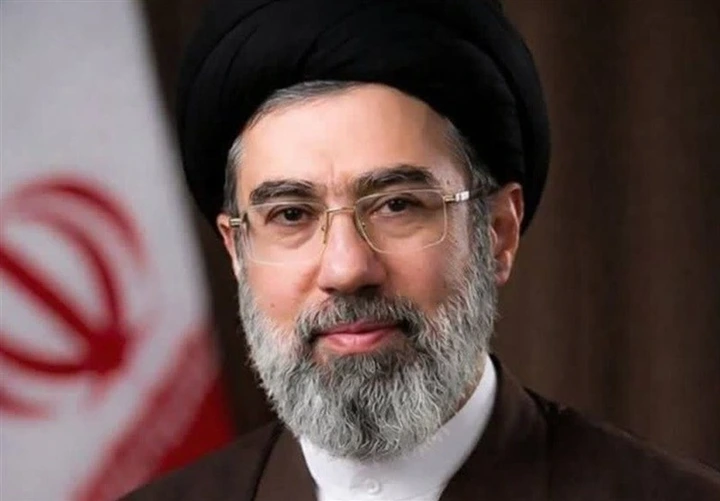
The two sources claimed that rumours circulating within senior regime circles suggest Mojtaba is in very poor health and could be nearing death. One of the sources reportedly said reports of his possible death in the near future “would not be surprising.”
Uncertainty is deepening within Iran’s political establishment over the health and political future of Mojtaba Khamenei, son of the late Supreme Leader Ayatollah Ali Khamenei, amid growing speculation over the country’s succession struggle.
According to a report by Anadolu Agency on Friday, August 7, 2026, two sources close to President Masoud Pezeshkian’s administration told IranWire that Mojtaba has not met with any cabinet member since a February 28 US strike on the Supreme Leader’s compound.
The reported strike allegedly killed Ali Khamenei and several members of his family.
Since the incident, Mojtaba has reportedly made no public appearance or delivered any speech, while state media have released only a limited number of statements and letters attributed to him.
His prolonged absence has triggered growing speculation among senior officials and political figures over his health and standing within the Islamic Republic.
The two sources claimed that rumours circulating within senior regime circles suggest Mojtaba is in very poor health and could be nearing death. One of the sources reportedly said reports of his possible death in the near future “would not be surprising.”
The speculation comes against the backdrop of reported tensions over influence and succession within Iran’s political establishment.
Regime insider Mohammad Bagher Khazali reportedly claimed that Mojtaba had previously been removed from his father’s inner office, known as the “beyt”, for three years.
If accurate, the claim could indicate that Mojtaba’s position as a potential successor to his father was not always secure.
Khazali alleged that Asghar Hejazi was involved in Mojtaba’s removal, while the dismissal of Hossein Taeb, described as one of Mojtaba’s closest security allies, was presented as part of a broader internal struggle for influence.
He also criticised President Pezeshkian, describing him as “a fake individual with no understanding,” and alleged that his presidential candidacy was approved following intervention by Alireza Marandi, a former physician to Ali Khamenei.
The claims have not been independently verified, and Mojtaba’s reported absence has not been officially explained by Iranian authorities.
With uncertainty surrounding his health and political role, the reports are likely to intensify questions over the balance of power and the succession process within Iran’s ruling establishment.