Inside the Decay of Kaduna's First Tuberculosis Hospital
Once a referral centre that attracted patients and medical students from across Northern Nigeria, Kaduna's first tuberculosis hospital now stands abandoned, leaving patients, health workers and residents to grapple with the consequences of years of neglect.
By ISRAEL BULUS ·
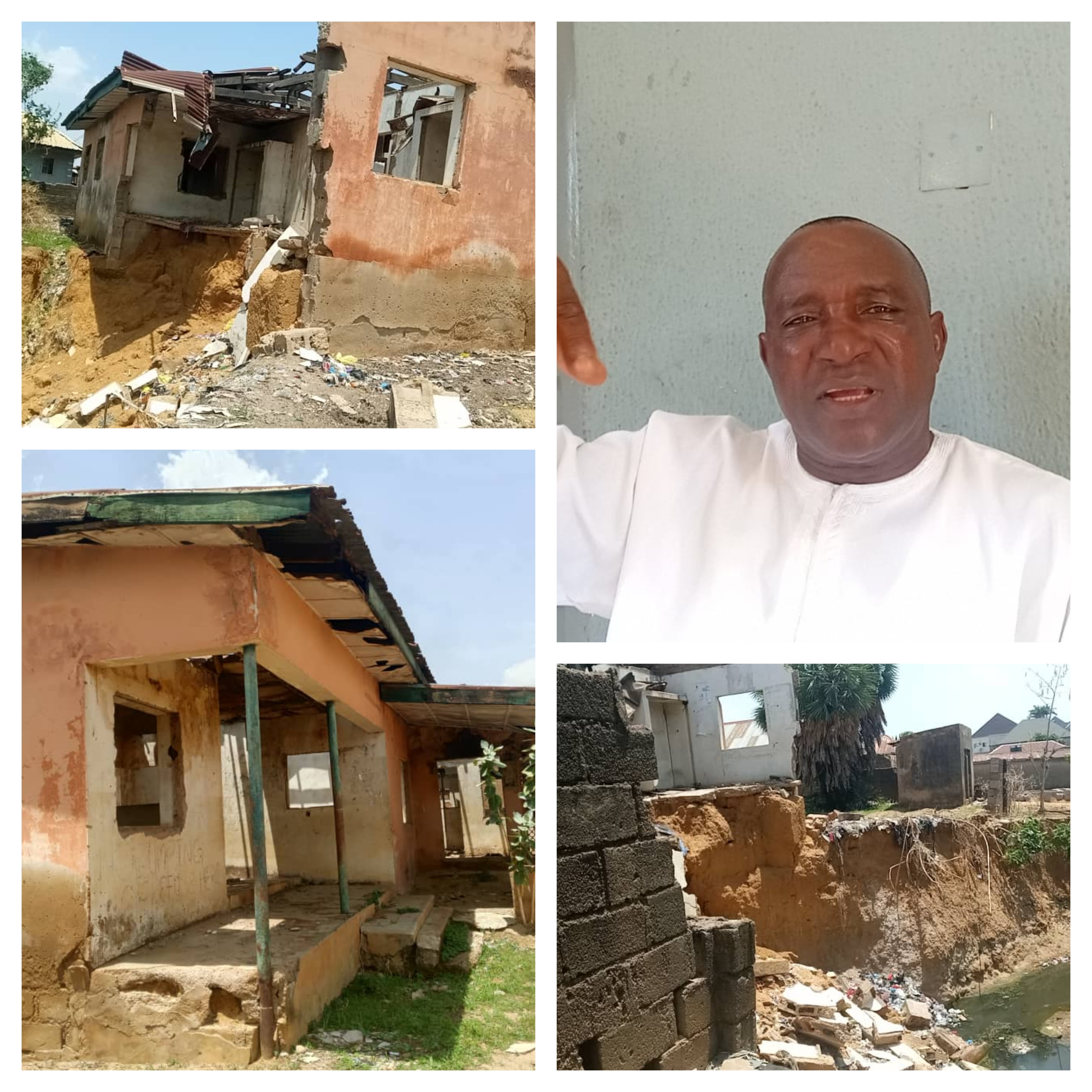
Once a referral centre that attracted patients and medical students from across Northern Nigeria, Kaduna's first tuberculosis hospital now stands abandoned, leaving patients, health workers and residents to grapple with the consequences of years of neglect.
The once-renowned Tuberculosis and Leprosy Hospital in Narayi, Chikun Local Government Area of Kaduna State, reputed to be the first tuberculosis treatment facility established in the state, has fallen into severe decay, forcing health workers to attend to patients in open spaces while residents battle fears over the future of the historic institution.
Our correspondent, who visited the hospital, observed a facility in advanced decay. Overgrown weeds had taken over large sections of the premises, while several buildings showed visible signs of deterioration, including cracked walls, damaged roofs and broken doors and windows. Deep erosion gullies were also visible behind the hospital, underscoring concerns raised by health workers and community leaders about the safety of the environment.
What was once a major referral centre for tuberculosis treatment now bears the scars of years of abandonment, with many structures lying idle and in various stages of collapse.
Findings by The PUNCH revealed that the hospital, which once attracted patients from across Kaduna State and neighbouring states, has been abandoned for years despite repeated promises by successive governments to rehabilitate and upgrade the facility.
The Village Head of Narayi, Sule Sarki Garba lamented that the community voluntarily handed over the hospital to the government with the expectation that it would be rebuilt and equipped to continue serving the people, but said those hopes had remained unfulfilled.
“We gave the facility to the government so it could be rebuilt for the benefit of the people, but since then no real help has come. Government officials come here, snap pictures, make promises and assure us they will return to rehabilitate the hospital, but nothing eventually happens,” he said.
“Every administration comes and goes, yet the hospital remains in this terrible condition.”
The monarch also expressed concern over reports that authorities were considering relocating the hospital to another community, insisting that the people of Narayi would resist any such move.
“We are hearing that they want to relocate the hospital to another community, but we strongly disagree with that. We have never said we do not need the hospital. We still have enough land and space for expansion and redevelopment here in Narayi.
“Our parents and elders sacrificed a lot to bring this hospital here at a time when many communities were running away from such a facility. Now that people have seen its importance and value, they want to move it elsewhere. As a community, we are not in support of that move and we will not allow it,” he stated.
The traditional ruler recalled that the facility had served thousands of tuberculosis patients over the years and remained a vital health institution before its decline.
“This hospital has served many people suffering from tuberculosis and related illnesses. Patients came from far and near to receive treatment here. Many were admitted and successfully recovered. A lot of people regained their health in this hospital and returned home healed,” he added.
Also speaking, the officer overseeing tuberculosis services in the area, Mrs. Chibi Gandu, said the deterioration and abandonment of the specialised Tuberculosis and Leprosy Hospital forced health authorities to relocate tuberculosis services to the Narayi Primary Health Care Centre, where she was subsequently posted.
According to her, inadequate space at the PHC has made it difficult to properly manage tuberculosis patients, forcing some of them to receive treatment outside the facility.
“The hospital has been completely abandoned. Most of the workers have been transferred and dispersed to other hospitals, while the facility itself has been left to deteriorate,” she said.
“After I was transferred to the Narayi Primary Health Care Centre, I continued caring for tuberculosis patients there. However, because there is not enough space at the PHC, some of the patients are attended to outside.”
She explained that the arrangement had exposed patients to stigma and discouraged many from seeking treatment.
“Some of the patients stopped coming entirely because of stigmatisation. Many of them do not feel comfortable receiving treatment outside where people can easily identify them as tuberculosis patients,” she said.
Mrs. Gandu noted that before its decline, the Narayi Tuberculosis and Leprosy Hospital was a major referral centre that catered to patients from different parts of Kaduna State and beyond.
She recalled that the facility also served as a practical training centre for medical students from due to its reputation as one of the state's foremost tuberculosis treatment institutions.
“When I was first posted here, the hospital was functioning very well. Medical students from Zaria used to come here for lectures and practicals because this place was recognised as an important centre for tuberculosis care,” she said.
The health worker further raised concerns over severe erosion threatening the abandoned hospital premises, warning that the situation posed serious danger to lives and property.
“The hospital is located near a riverbank and erosion has badly affected the environment. Parts of the land behind the hospital have already collapsed and the place is becoming unsafe,” she said.
Recounting a personal experience, she revealed that her son once fell into one of the erosion-ravaged sections within the hospital premises while she was documenting the level of destruction.
“I took pictures after my son fell into the eroded area. He sustained injuries, though we thank God it was not worse than that. Up till today, nothing has been done about it,” she lamented.
Despite the challenges, she said tuberculosis patients still rely on the limited services available at the Narayi Primary Health Care Centre, where healthcare workers continue to struggle with inadequate facilities and space.
Appealing to Kaduna State Governor, , to intervene, the village head said many residents were suffering as a result of the hospital’s collapse.
“I believe the governor may not fully know the condition of this hospital yet. If he sees what is happening here himself, I believe he will act because we have seen what he has done in other places,” he said.
“Sadly, because the hospital is no longer functioning properly, many people are suffering and some patients are dying due to lack of adequate treatment. We want the governor to help revive this hospital so that people can once again benefit from the services it used to provide.”
The village head maintained that the Narayi Tuberculosis and Leprosy Hospital was the first tuberculosis treatment centre established in Kaduna State before the one in Zaria, describing it as a historic institution that should be preserved and revitalised rather than abandoned.
For many residents, health workers and former patients, the hospital is more than just a collection of ageing buildings. It is a symbol of a healthcare legacy that once brought hope and healing to thousands but now stands as a stark reminder of years of neglect, unfulfilled promises and missed opportunities.