Green Maritime Defines Future of Shipping — Peterside
Green Maritime Defines Future of Shipping — Peterside
By Divine Macaulay ·
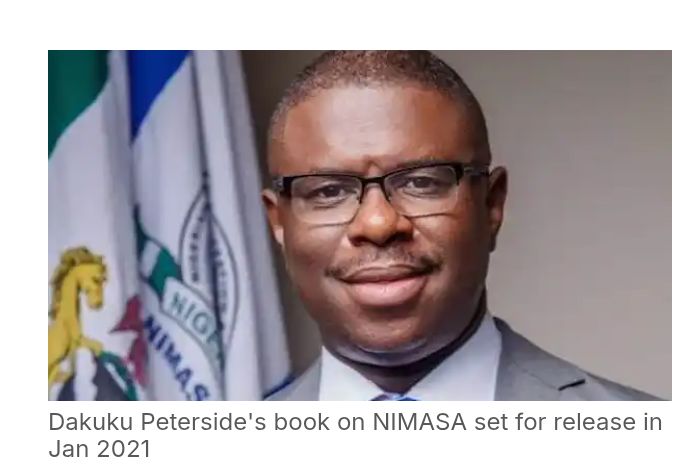
"Green maritime is about environmentally sustainable practices, technologies and policies that reduce the industry's impact on the environment," he said, stressing that organisations that successfully combine decarbonisation, digitalisation, innovation and operational excellence will be best positioned to thrive.
LAGOS — Dakuku Peterside, maritime regulation and compliance expert and former Director-General of the Nigerian Maritime Administration and Safety Agency (NIMASA), has said the future of the global shipping industry will be shaped by green maritime practices as operators face mounting environmental regulations and growing market demands for sustainability.
Speaking at a webinar themed "Green Maritime: Strategy and Operations Beyond Optics," Peterside said decarbonisation has evolved beyond environmental responsibility to become a strategic business priority that determines competitiveness, operational efficiency, access to finance and long-term profitability.
The webinar, organised by Nature hedge in partnership with the West Africa Green Economic Development Institute (WAGEDI), Gregory University, SSA Hub and the Sustainable Energy Practitioners Association of Nigeria (SEPAN), convened shipowners, port authorities, regulators, operators, financiers and energy sector stakeholders to discuss Africa's transition to sustainable shipping.
Against the backdrop of stricter International Maritime Organization (IMO) carbon-intensity regulations and the expanded European Union Emissions Trading System (EU ETS), Peterside said the maritime industry must embrace innovation to remain relevant in an increasingly carbon-conscious global economy.
"Green maritime is about environmentally sustainable practices, technologies and policies that reduce the industry's impact on the environment," he said, stressing that organisations that successfully combine decarbonisation, digitalisation, innovation and operational excellence will be best positioned to thrive.
He noted that green maritime should no longer be viewed as an environmental branding exercise but as a pathway to measurable operational efficiency, business resilience and sustained growth.
The webinar also explored practical measures for accelerating the industry's transition, including voyage optimisation, just-in-time port arrivals, the adoption of alternative fuels such as methanol, ammonia and liquefied natural gas (LNG), deployment of digital technologies and strengthened safety-focused workforce training.
Magnus Onuoha, President of the Governing Council of REEEAA and Chairman of SEPAN's Board of Trustees, said the webinar serves as a precursor to a strategic pan-African workshop scheduled to hold in Accra, Ghana, where stakeholders will further advance discussions on green maritime development.
Also speaking, Hermione Manuel, Managing Director of Damen Shipyards South Africa, described green maritime as the intersection of sustainability, competitiveness and regulatory compliance, pointing to the company's hybrid vessel initiatives as evidence of the industry's shift toward cleaner shipping technologies.
The organisers said the webinar series will continue ahead of the Accra workshop as part of broader efforts to strengthen Africa's technical capacity and strategic leadership in maritime decarbonisation.