Ghana Backs Five-Year Presidential Term, Mahama Excluded
Ghana Backs Five-Year Presidential Term, Mahama Excluded
By Divine Macaulay ·
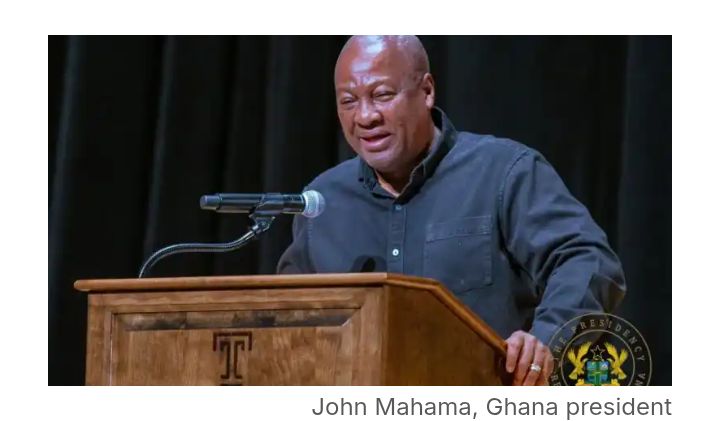
The proposal forms part of recommendations submitted by the Constitutional Review Committee established by Mahama last year to review the country's 1992 Constitution.
Ghana has accepted a proposal to extend the presidential term from four years to five, paving the way for a major constitutional reform that will not benefit incumbent President .
The proposal forms part of recommendations submitted by the Constitutional Review Committee established by Mahama last year to review the country's 1992 Constitution.
Speaking on Thursday, Attorney-General and Minister for Justice, , said the government had adopted the recommendation, arguing that a five-year tenure would give future administrations adequate time to implement policies and deliver meaningful development before seeking a fresh mandate.
According to Ayine, the current four-year cycle leaves governments with limited time to execute their programmes, as the early months are consumed by transition processes while the final phase is dominated by election activities.
He said a longer tenure would improve governance, strengthen policy implementation and allow voters to better assess the performance of elected governments.
The government also approved a proposal to reduce the minimum age for presidential candidates from 40 years to 35, a move aimed at widening political participation among younger Ghanaians.
In addition, Parliament's tenure would be extended to align with the proposed five-year presidential term, while presidential elections would be shifted to the first week of November to provide a wider transition period before the January 7 inauguration.
However, Minister for Government Communications, , clarified that the proposed amendment would not apply to Mahama, meaning he will continue to serve under the current constitutional provisions.
The proposed reforms must still pass through the legislative process before being subjected to a national referendum scheduled for 2027.
For the amendment to take effect, at least 40 per cent of registered voters must participate in the referendum, with a minimum of 75 per cent voting in favour of the constitutional changes.