Farooq Oreagba’s Honest Reflection on Wealth on MENtality with Ebuka.
Farooq Oreagba revealed on the podcast that he was a dollar millionaire at 30 but was working as a labourer at 35 after losing his banking job in England.
By Godwin Adejor ·
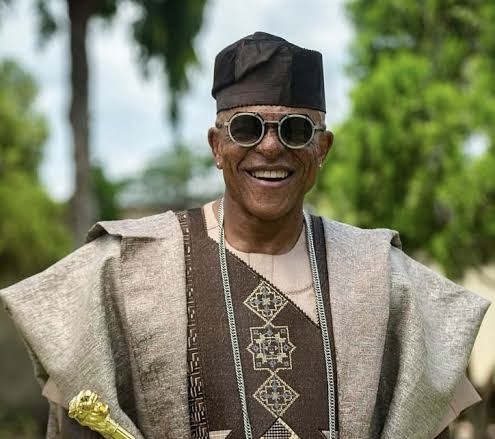
Appearing alongside co-host Banky W (Banky Wellington) and other guests in a conversation that explored materialism, success, and what money truly signifies to men, the finance executive and cultural figure known as “Mr. Steeze” delivered one of the episode’s most memorable lines: “I was a dollar millionaire at 30. At 35, I was working as a labourer.”
The statement was not meant for shock value. Oreagba used it to highlight a deeper point about the fragility of wealth when priorities are misaligned and about valuing life itself over mere accumulation.
Oreagba explained that he had achieved significant financial success early in life. By age 30, he was a dollar millionaire. Yet within five years, the situation had changed dramatically. After losing his banking job in England, he found himself working as a labourer to sustain a lifestyle he was committed to maintaining. He hustled quietly, doing “all kinds of things,” while outward signs of success, including Porsches, remained visible. No one saw the struggle behind the image.
“I had my priorities wrong,” he said plainly. The admission carried weight coming from a man with decades of experience in capital markets, investment banking, and senior roles in Nigeria’s financial infrastructure, including serving as Managing Director/CEO of NG Clearing Limited.
Oreagba framed his story within a broader discussion on materialism. He posed a thought experiment: if someone offered $10 million but the recipient would not live more than 24 hours afterward, would it still be worth taking? His answer was no—he could make the money himself, but living held far greater value. The sudden loss of status and the experience of manual labor in England forced him to re-evaluate what truly mattered.
He noted that his lifestyle has remained relatively consistent even as he approaches 60. What changed was visibility. A viral photograph from the Ojude Oba festival drew widespread attention, but the underlying approach to money and living had already been shaped by earlier hard lessons.
Oreagba’s remarks reinforced several themes found throughout MENtality: the pressure on men to achieve and provide, the danger of tying identity solely to financial status, and the importance of resilience. He has long spoken of believing in his ability to generate wealth, yet he balances that confidence with an understanding that health crises (he is a cancer survivor) or sudden career setbacks can quickly erode riches.
The “millionaire at 30, labourer at 35” arc serves as a cautionary and ultimately hopeful message. Wealth can be built, lost, and rebuilt. However, priorities determine whether money becomes a tool for freedom or a trap that demands constant performance. Authenticity, adaptability, and a clear understanding of what one values beyond the bank account emerge as the more enduring forms of security.
In an episode exploring how Nigerian men navigate success, provision, and self-worth, Farooq Oreagba’s personal story pierced through abstract talk. It was a reminder that financial peaks and valleys are common, that appearances can mask struggles, and that the real measure of a life is not the highest net worth at any single age but the wisdom gained along the way.