Farmers, CSOs Demand JBS Deal Transparency
Farmers, CSOs Demand JBS Deal Transparency
By Divine Macaulay ·
Nigeria signed a letter of intent with JBS in 2024 for a $2.5 billion investment in the livestock sector. According to the Special Adviser to the President on Information and Strategy, Bayo Onanuga, President Bola Tinubu witnessed the signing ceremony on November 21, 2024, in Rio de Janeiro, Brazil.
Farmers, researchers, scientists and civil society organisations have called on the Federal Government to make public the Memorandum of Understanding (MoU) underpinning the proposed $2.5 billion livestock investment by Brazilian meat giant, JBS S.A.
The stakeholders warned that secrecy surrounding the deal could expose Nigeria to serious health, environmental and socio-economic risks, urging the government to subject the investment to comprehensive environmental and social impact assessments before implementation.
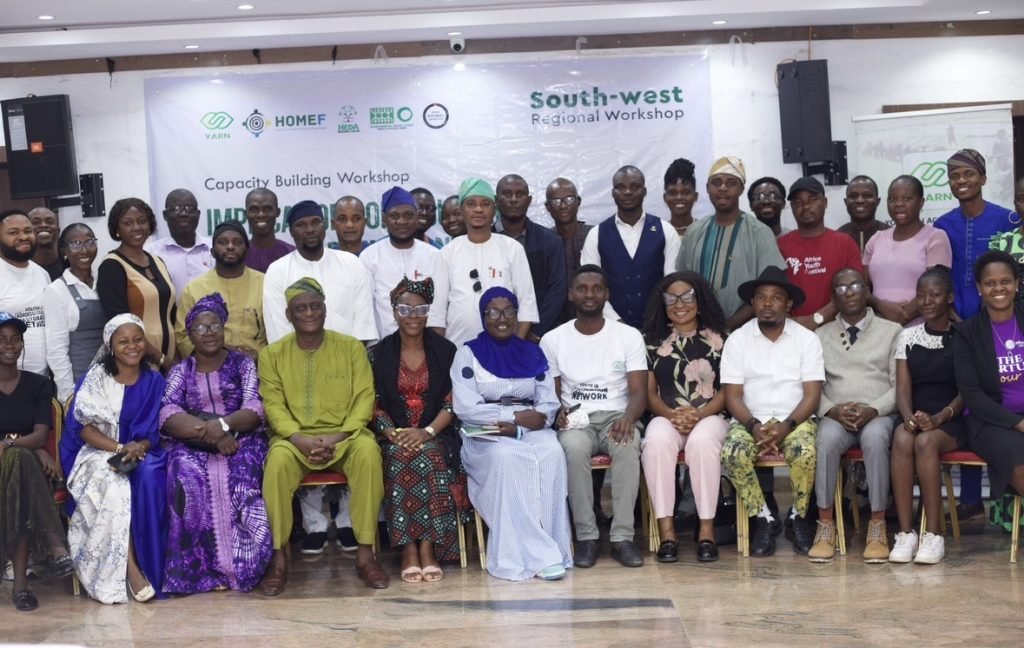
They made the call on Wednesday at a South-West regional workshop in Abeokuta, Ogun State, themed, “Sustainable Alternatives to Industrial Animal Farming: Pathways to a Resilient Food System in Nigeria.”
Nigeria signed a letter of intent with JBS in 2024 for a $2.5 billion investment in the livestock sector. According to the Special Adviser to the President on Information and Strategy, Bayo Onanuga, President Bola Tinubu witnessed the signing ceremony on November 21, 2024, in Rio de Janeiro, Brazil.
The investment is expected to include the construction of six meat-processing factories aimed at expanding Nigeria’s meat processing capacity.
Speaking at the workshop, the Director of Consultancy, Youths in Agroecology and Restoration Network (YARN), Oluwaseyi Olawuyi, said the government must ensure that the agreement protects public health, the environment and the livelihoods of smallholder farmers.
Olawuyi said civil society organisations were not opposed to foreign investment but insisted that the terms of the JBS agreement must be made available for public scrutiny.
“We are not anti-development, but there is a need for government to do the needful. Let Civil Society have access to this MoU so that we know what is there,” he said.
He warned that Nigeria must learn from the experience of the oil sector, where what was initially seen as an economic blessing had, in his view, produced significant environmental and socio-economic challenges.
“If JBS is coming to Nigeria, we are not saying they should not come, but let us guide them, so that what we experienced in the oil sector will not be experienced again,” Olawuyi said.
He disclosed that efforts to obtain the MoU from the Federal Ministry of Livestock Development and some state governments had yielded conflicting responses.
“We reached out to the Federal Minister of Livestock; they said the MoU was domiciled with states. Then we reached out to Ogun, Niger, Cross River and some other states. They said it was domiciled with the Federal Government. It’s just like a puzzle,” he said.
The Director of Operations, YARN, Dare Elujulo, called for a resilient food system capable of withstanding climate shocks, disease outbreaks and disruptions to supply chains.
Elujulo urged Nigerians to diversify their sources of protein beyond meat and fish, citing cowpeas, soybeans, bambara nuts, indigenous poultry and mushrooms as alternatives.
He also warned that intensive animal-confinement systems could increase the risk of zoonotic disease transmission, while excessive or routine use of antibiotics in industrial livestock production could worsen antimicrobial resistance, posing risks to both human and animal health.
In a communique issued at the end of the workshop, the stakeholders demanded the immediate public disclosure of the JBS MoU by the Federal and relevant state governments.
They also called for strict enforcement of environmental, social, labour, animal welfare and public health standards, including climate-risk assessments, proper waste management, worker safety and fair compensation.
The stakeholders further urged the government to protect smallholder farmers, pastoralists, indigenous communities and communal land rights through due process, consultation, transparency and adequate compensation.
They also advocated greater public investment in agroecological, community-led, climate-resilient and diversified food systems rather than disproportionately supporting industrial animal farming.