Ex-DSS Operative Claims Abacha Died of Cardiac Arrest During Intimate Encounter
A former Assistant Director of the Department of State Services (DSS), Dennis Amachree, has claimed that Nigeria’s late military Head of State, General Sani Abacha, died from a cardiac arrest during an intimate encounter, dismissing long-standing conspiracy theories surrounding his death.
By Angle360 Admin ·
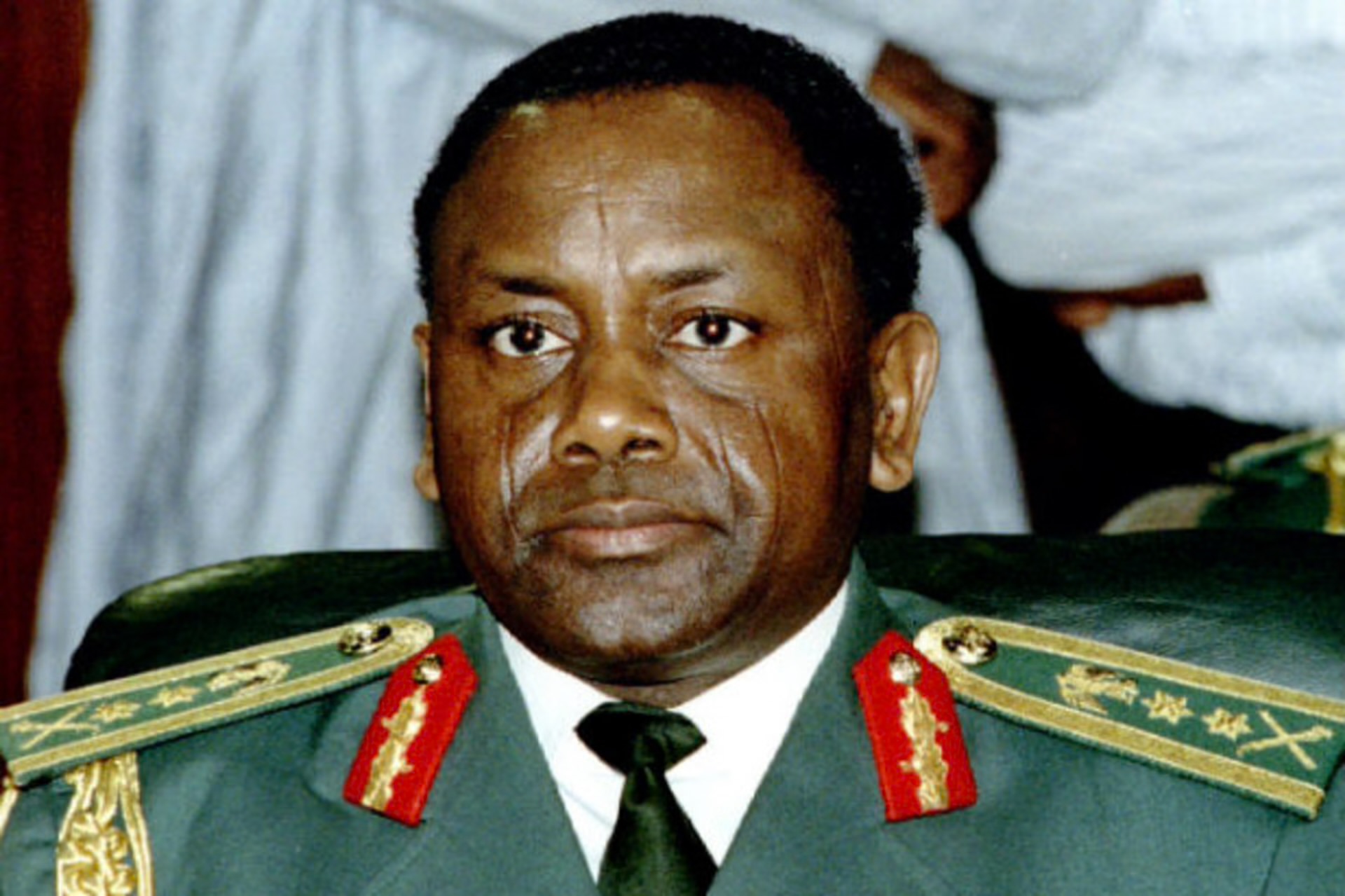
A former Assistant Director of the Department of State Services (DSS), Dennis Amachree, has claimed that Nigeria’s late military Head of State, General Sani Abacha, died from a cardiac arrest during an intimate encounter, dismissing long-standing conspiracy theories surrounding his death.
Amachree made the claims in his newly released memoir, DSS @40: My Journey Behind the Shield, excerpts of which were published by The Nation on Tuesday.
The retired intelligence officer, who served as Assistant Director of Operations and Intelligence at the Lagos DSS Command when Abacha died in June 1998, said the late military ruler suffered a fatal cardiac arrest at about 4:05 a.m. at the Presidential Villa in Abuja.
According to Amachree, the woman who was with Abacha at the time panicked after discovering that he had become unresponsive and left the Presidential Villa before security personnel became aware of the incident.
He alleged that the woman, a pharmacist who was in Abuja for a professional conference, had accompanied her elder sister—whom he described as Abacha’s girlfriend—to the Presidential Villa earlier that night.
“At approximately 2.40 am, shortly after Gen. Useni left, Abacha’s girlfriend, an Igbo lady (name withheld), arrived at the Aso Rock Guest House from the Nicon Noga Hilton Hotel.
“With her was her younger sister, a pharmacist who was in Abuja for a conference. The Head of State had just bought his girlfriend a new SUV, and they decided to stop by to say hello to ‘Oga’.
“Abacha was taken with the younger sister, and after a short while, the girlfriend returned to the hotel, leaving the pharmacist alone with the Head of State,” Amachree wrote.
The former DSS operative further claimed that the woman realised something was wrong during the encounter.
“At about 4.05 am, as they were getting intimate, the pharmacist realised Abacha had stopped moving. She called out to him, but he was unresponsive and stiff. She checked his pulse; there was none.”
Amachree said the woman, frightened by the situation, left the Presidential Villa after requesting transport back to her hotel.
“In a state of panic, she quickly dressed and left the guest house, telling the soldier on guard duty that ‘Oga’ had asked for a car to take her back to her hotel.”
According to him, the woman boarded an early morning flight to Lagos before security agencies were able to question her.
He added that when Abacha’s Chief Security Officer, Major Hamza Al-Mustapha, was informed of the military ruler’s condition at about 5:00 a.m., efforts were immediately made to locate the woman, but she had already departed Abuja.
Amachree said he was subsequently instructed by the DSS headquarters to trace and interrogate her in Lagos.
Recalling the interview, he quoted the woman as saying, “I did not kill him, he died on top of me.”
He added: “My team located and brought her to my office. I interrogated her myself. The first thing she said to me was: ‘I did not kill him, he died on top of me.’ After her detailed account, I called the Director in Abuja, and she was immediately flown back.”
Amachree maintained that the woman’s account contradicted the numerous theories that have circulated over the years, including claims that Abacha died after eating poisoned apples.
“The lady pharmacist’s account, on whom Abacha apparently had a coitus-induced cardiac arrest, remains the true position, and puts an end to the conspiracy theories and half-truths that have gone viral,” he said.
General Sani Abacha ruled Nigeria from November 1993 until his death on June 8, 1998. His sudden demise has remained one of the country’s most debated political events, with competing accounts and conspiracy theories continuing to emerge nearly three decades later.
Amachree’s account represents his personal recollection of the events and has revived public debate over the circumstances surrounding the late military ruler’s death.