David Umahi, Moral Accountability and the Crisis of Leadership Recruitment
The pursuit of a better nation demands more than prudent management of public resources. It requires leaders whose integrity can withstand public scrutiny, whose wealth can be transparently explained, and whose character reflects the moral responsibility entrusted to public office
By Angle360 Admin ·
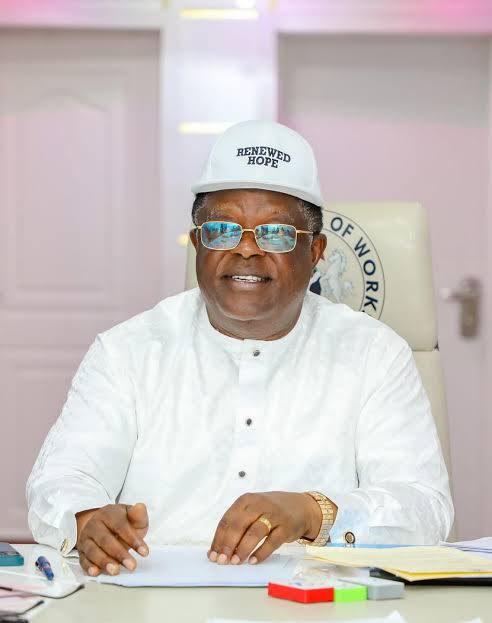
The Burden of Public Office: David Umahi, Moral Accountability and the Crisis of Leadership Recruitment in Nigeria By Victor Imeh Peter Enangama, PHD
“The pursuit of a better nation demands more than prudent management of public resources. It requires leaders whose integrity can withstand public scrutiny, whose wealth can be transparently explained, and whose character reflects the moral responsibility entrusted to public office.”
Introduction:
Nigeria's democratic conversation has long been centred on transparency, accountability and prudent management of public resources for the benefit of the general public. Yet beneath these legitimate concerns lies a deeper and often neglected question, one that extends beyond governance into the moral character and integrity of those entrusted with public authority.
Financial accountability is indispensable, but it is only one dimension of public leadership. Equallyimportant is moral accountability. Citizens deserve to know not only how public funds are managed, but also whether those who wield state power possess the ethical integrity expected of public office.
Unfortunately, this dimension of accountability remains one of the weakest pillars of Nigeria's democratic culture. The purpose of this article is therefore neither to diminish David Umahi's infrastructural achievements as a governor, a senator or as a Minister, nor to pronounce guilt where no court has done so. Rather, it seeks to interrogate the documented controversies, publicly reported allegations, official responses and unresolved questions that have accompanied his years in public office, and to use his case to examine a broader crisis in how Nigeria recruits, scrutinises and holds accountable those who seek public trust.
Behavioural Pattern of Public Office Holders:
Across the political landscape, public office holders frequently respond to legitimate questions about their conduct by constructing narratives of personal achievement rather than providing transparent explanations. Public image replaces public accountability, and wealth is presented as proof of competence. Titles become shields against criticism, while carefully cultivated public campaigns along ethnic, tribal, and religious lines often substitute for verifiable evidence on the origins of influence, affluence, and public accomplishment.
The construction of favourable political narratives, carefully crafted rhetoric, and a culture of intimidation and harassment, reinforced by the selective deployment of state institutions, has increasingly become a defining instrument of elite power in Nigeria. These mechanisms often serve to insulate public office holders from legitimate scrutiny and democratic accountability.
Equally troubling is the growing manipulation of outdated and broad laws on defamation and cybercrime as instruments for silencing journalists, civil society actors, and other voices of conscience.
Instead of protecting reputations from malicious falsehoods, such laws are increasingly perceived as tools for suppressing dissent, discouraging investigative journalism, and narrowing the democratic space for constructive criticism.
Consequently, political and public office holders are often elevated into larger-than-life figures through orchestrated public relations, personality cults, and partisan mobilization, while rigorous verification of their integrity, wealth, conduct, and public stewardship receives comparatively little institutional attention. In such an environment, perception eclipses evidence, public adulation substitutes for accountability, and carefully curated narratives become more influential than objective validation of the character and integrity of those entrusted with public office.
The political career of the current Minister of Works, David Umahi, provides a compelling case study through which this broader pattern can be examined. Over the years, Umahi has consciously cultivated an image that extends beyond that of a conventional public official, embodying many of the characteristics often associated with Nigeria's political elite. His public engagements are frequently marked by confidence that critics describe as arrogance, an emphasis on personal accomplishment, and a leadership style that appears to place individual achievement above institutional governance.
Equally, concerns have been raised over what some perceive as a disregard for established governance protocols and ethical standards in public administration. His repeated celebration of the infrastructure delivered over the past three and a half years is often presented as a personal accomplishment, rather than as the fulfilment of a public trust financed by the collective resources of the Nigerian people for their common good.
The public perception of Minister Umahi is that of boastfulness, and he has been heard and seen calling himself the “Lion of the South East” in several meetings. He has previously been quoted by Premium Times Newspaper of October 12, 2019, as being super rich and a billionaire at the age of 25, and most recently quoted in a video circulated and published by Arise News on 27 January 2026 as saying: “Embrace me as one of your own. Don't listen to noise makers. My capacity is like 10 times what it was when I was governor. I'm very dangerous now.”
Whether intended as political rhetoric, personal conviction or strategic public branding, these declarations have helped construct an image of extraordinary influence, wealth, authority and accomplishment. There is nothing inherently objectionable about confidence, public recognition or political branding; democracies have always produced charismatic leaders who cultivate distinctive public identities. However, the greater the claims of influence, exceptional achievement and personal success, the greater the corresponding obligation to submit those claims to public scrutiny which is one of the aims of this publication.
Public office does not merely confer authority; it enlarges the duty to account. Such declarations are not improper in themselves. They do, however, invite legitimate public questions regarding asset transparency, institutional oversight, ethical accountability, and the relationship between public office and private wealth. In every healthy democracy, extraordinary public claims naturally attract extraordinary public scrutiny.
Yet a recurring feature of the Minister's public engagements has been his tendency to transform questions of accountability into contests of personality. Difficult questions are often met with humour, ridicule, confrontational rhetoric, or the portrayal of critics as political adversaries rather than citizens exercising their democratic right to demand accountability. The debate often shifts from evidence to personalities, from documentation to emotion, and from institutional accountability to political theatre. This pattern is by no means unique to one individual; rather, it reflects a broader political culture in which public officials frequently respond to scrutiny by invoking political persecution, religious legitimacy, ethnic solidarity or personal popularity instead of directly engaging the substance of legitimate public concerns. That culture has become one of the greatest obstacles to democratic accountability in Nigeria.
Accountability Mechanisms:
Institutions established to safeguard the public interest, including the Nigeria Police Force, the Department of State Services, the Economic and Financial Crimes Commission and the Independent Corrupt Practices and Other Related Offences Commission, possess responsibilities that extend beyond prosecuting completed offences. Their constitutional mandate equally includes preserving the integrity of public institutions by objectively investigating credible questions concerning those entrusted with public authority.
In mature democracies, accountability strengthens leadership because it reinforces public trust. In Nigeria, however, the demand for accountability is too frequently interpreted as hostility. Whenever legitimate questions arise, an all-too-familiar pattern emerges: critics become political enemies, investigative reports are dismissed as orchestrated attacks, and religious language is invoked to sanctify personal defence. Political supporters are mobilised to transform legitimate public scrutiny into narratives of persecution, while poverty is weaponized by hireling political thugs and paid groups who protest in the interest of the public officer, some protesting members unable even to read the captions on the banners they carry.
Evidence gives way to emotion, and the consequence is that citizens are increasingly encouraged to judge allegations through partisan loyalty rather than objective facts. Democratic accountability is weakened, not because institutions are absent, but because political narratives often overwhelm institutional processes.
As the legal maxim reminds us, he who comes to equity must come with clean hands. By the same principle, those who seek public trust and exercise public power must be willing to submit their conduct, character, and stewardship to the highest standards of public accountability.
In January 2008, the late Senator Nuhu Aliyu, a former Deputy Inspector General of Police, startled the Nigerian Senate when he alleged during plenary that some serving legislators had previously been subjects of advance fee fraud investigations while he served in the Police Force. Whether those allegations were ultimately pursued is less significant than the enduring institutional question they raised: how rigorously does Nigeria scrutinise those entrusted with public office? Nearly two decades later, that question remains as urgent as ever.
Methodology Employed in the Work: Empirical Newspaper Harvest
To move this discussion from generalised critique to documented evidence, this work employed a systematic empirical newspaper and social-media harvest, tracing publicly reported controversies, allegations, petitions and official responses associated with David Umahi across his tenure as Deputy Governor and Governor of Ebonyi State (2011–2023) through to his current role as Minister of Works (2023–present).
The methodology proceeded in four stages:
1. Source identification: A structured search was conducted across established Nigerian news outlets, including Punch, Vanguard, ThisDay, Premium Times, The Cable, Daily Post, Daily Trust, Leadership, The Guardian, Business Day, The ICIR, Legit.ng, Pulse Nigeria and Sahara Reporters, supplemented by public posts on X (formerly Twitter) reflecting reaction to reported events.
2. Categorical harvesting: Search terms were structured around known allegation categories relevant to public accountability: financial impropriety and fund diversion, anti-corruption agency petitions and probes, contract-cost transparency, personal and contractual disputes, and matters involving loss of life or personal safety connected to public office rather than a single keyword search, to avoid narrowing the harvest prematurely.
3. Verification and classification: Each item harvested was classified by period (governorship-era or ministerial-era), current status (e.g. petition filed, agency probe, unresolved, denied, disputed), and corroboration level. Claims reported by only a single outlet were explicitly flagged as such rather than presented with the same evidentiary weight as multiply-corroborated reporting. One claim encountered during the harvest, an unverified assertion of a “$250 million fraud” probe by the “US Congress,” could not be corroborated by any credible outlet and was excluded from the evidentiary record rather than included with a caveat, consistent with a standard of excluding claims below a minimum credibility threshold.
4. Compilation and sourcing: Findings were compiled into a structured table distinguishing allegation, period raised, present status, and a detailed account with direct hyperlinks to primary reporting, allowing independent verification of every claim referenced in this work.
This harvest is a study of public record and public reaction, not an independent investigation. It documents what has been alleged, reported, and publicly contested, and the institutional and personal responses those allegations have generated. It does not itself establish the truth or falsity of any individual allegation. Two limitations should be stated plainly: first, the harvest reflects what is publicly reported and indexed in searchable media as of early August 2026, and is unlikely to be fully exhaustive, since smaller or more localised petitions may exist outside indexed coverage; second, a meaningful share of the most serious recent reporting originates from a single outlet, Sahara Reporters, whose findings on some matters have not yet been independently corroborated by other major outlets at the time of writing, a limitation this work discloses rather than obscures.
Summary of Findings:
The harvest identified thirteen distinct, publicly documented allegations or controversies spanning Umahi's governorship and ministerial tenures. Their character differs meaningfully across the two eras, and that difference is itself a finding.
Governorship era (2015–2023): Allegations from this period centre predominantly on financial and administrative accountability: the arrest of Umahi's brother in connection with a N400 million disbursement traced to a larger N23 billion fund linked to the 2015 presidential election; petitions by former aides alleging withheld or diverted local government allocations exceeding N6.7 billion; a disputed $119.4 million loan-recovery consultancy fee; and a broader anti-corruption agency review naming Umahi among governors under scrutiny.
The gravest matter from this period, however, is not financial: the unresolved 2021 disappearance, and alleged killing, of five engineers supervising an African Development Bank-funded road project after reported disputes with the state government, a matter that remains without official resolution five years later.
Ministerial era (2023–present): The character of allegations shifts toward contract-cost transparency and personal conduct. Public controversy over the disclosed cost of major federal highway projects drew criticism from a sitting state governor and a former Vice President, and generated sustained negative reaction on X. Separately, personal financial disputes, including allegations of unpaid debts and, in one case, sexual harassment, played out substantially through press conferences and social media rather than formal legal process. The most serious and most recent matter is the unresolved death of a young nurse at the Minister's private residence in June 2026, a case marked by a two-week public reporting delay, disputed medical evidence, and an active but unresolved police investigation at the time of writing.
A recurring institutional response pattern: Across nearly every documented matter, Umahi's public response follows a consistent structure: denial of personal wrongdoing, characterisation of critics or accusers as politically motivated, and, in the ministerial era, the proactive invitation of anti-corruption agencies to review his ministry's projects. This pattern is consistent with, and provides direct evidentiary support for, the behavioural pattern described in Section 2: the transformation of accountability questions into contests of personality and persecution narratives.
On outcomes: No entry identified in the harvest has, as of this writing, resulted in a criminal conviction of David Umahi personally. Several matters remain formally open (police investigation, National Assembly petition, or civil dispute); others appear to have been resolved through denial and public counter-narrative rather than through independent institutional finding. This absence of institutional closure, sustained across an eleven-year period in public office and multiple distinct offices, is itself a central finding of this work: it is not the volume of allegations alone that is significant, but the near-total absence of conclusive institutional resolution to any of them.
6. Conclusion and Recommendations
If public officials openly celebrate their achievements, citizens possess an equal democratic right to examine the controversies, unanswered questions and institutional responses that accompany those achievements. Public office is not merely a platform for recognition; it is an enduring obligation to transparency. As citizens, we bear a moral responsibility to insist that public power remains subject to public scrutiny. Democracies endure not because leaders are beyond criticism, but because no leader is beyond accountability.
Nigeria cannot build strong institutions while treating accountability as a political inconvenience. Leadership should never be insulated from scrutiny by wealth, titles, popularity, religion or ethnicity.
Public confidence is sustained not by carefully managed reputations but by transparent institutions willing to examine power wherever legitimate questions arise.
Arising from the foregoing, this work proposes the following:
1. Mandatory, publicly accessible asset declaration and verification for public office holders, conducted independently before appointment, at defined intervals during service, and upon leaving office, rather than relying solely on self-declaration.
2. Statutory timelines within which anti-corruption agencies (EFCC and ICPC) must formally respond to credible public petitions, whether by opening an investigation, closing a matter with published reasoning, or referring it onward, to prevent petitions from disappearing into institutional silence.
3. Reform of Nigeria's cybercrime and defamation statutes to remove their use as instruments against journalists, whistleblowers and civil society actors raising good-faith questions about public officials, while preserving legitimate protection against malicious falsehood.
4. An independent, non-partisan review mechanism, insulated from the direct authority of the public office holder concerned, for cases involving death, disappearance, or serious harm connected to a public official's office or household, given the acute conflict of interest inherent in self-investigation.
5. Sustained institutional and media follow-through on reported allegations until formal resolution, rather than allowing public attention to move on before a matter is concluded, since it is precisely this drift into silence that this work identifies as Nigeria's central accountability failure.
6. Legal and institutional protection for whistleblowers within government ministries and agencies, recognising that several of the allegations documented in this work originated from insiders who took on personal risk to raise them.
The case of David Umahi, examined here as one instance among many, should not be read as a verdict on any single individual. It should be read as a mirror held up to a democratic culture that has not yet decided whether accountability is a right its citizens will insist upon, or a courtesy its leaders may choose to grant.
Victor Imeh Peter Enangama, Ph.D., is a development expert, medical sociologist, and social justice advocate with over 15 years of experience working with International development organisations. Dr. Enangama brings this expertise to bear on the burden of accountability and its implications for development in Nigeria.