Dangote Dominates Fuel Supply, Meets 88% of Nigeria’s Petrol Demand as Diesel Imports End
Dangote Dominates Fuel Supply, Meets 88% of Nigeria’s Petrol Demand as Diesel Imports End
By Divine Macaulay ·
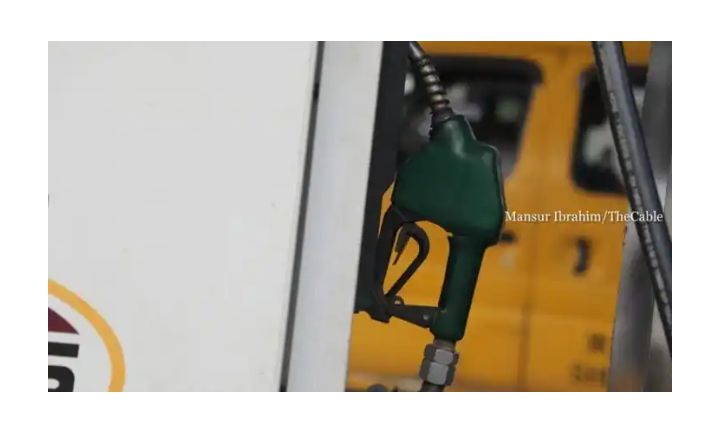
The Nigerian Midstream and Downstream Petroleum Regulatory Authority (NMDPRA) has disclosed that the Dangote Petroleum Refinery supplied nearly 88 per cent of the petrol consumed in Nigeria in May 2026, reinforcing its growing dominance in the country's downstream petroleum sector.
According to the regulator's monthly performance report released on Friday, the 650,000 barrels-per-day refinery accounted for 87.55 per cent of the Premium Motor Spirit (PMS), popularly known as petrol, supplied to the domestic market during the review period.
The report showed that Nigeria recorded an average daily petrol supply of 47.4 million litres in May, up from 44.4 million litres in April. Of this volume, 41.5 million litres per day came from domestic refining, while imports contributed 5.9 million litres per day.
NMDPRA stated that Dangote Refinery was solely responsible for the entire domestic petrol output, supplying 41.5 million litres daily to the local market. The refinery produced an average of 44.7 million litres of petrol per day and operated at an average capacity utilisation of 101.25 per cent during the month.
Despite the significant increase in local production, petrol imports rose by 59.5 per cent, increasing from 3.7 million litres per day in April to 5.9 million litres per day in May.
The report further indicated that average daily petrol consumption declined to 46.3 million litres, down from 51.1 million litres recorded in April. National petrol stock sufficiency also fell slightly from 17.7 days to 16 days.
Diesel imports fall to zero
In a major milestone for the country's energy sector, the NMDPRA reported that diesel imports dropped to zero in May, compared to 1.7 million litres per day imported in April.
The development was driven by a sharp increase in domestic diesel production, which rose to 18.8 million litres per day from 8.5 million litres per day in the previous month.
Dangote Refinery remained the dominant producer, recording an average daily diesel output of 24.5 million litres. Of this volume, 18.2 million litres were supplied to the domestic market, while 6.5 million litres were exported.
The regulator added that modular refineries, including Waltersmith Refinery, Edo Refinery, and Aradel Refinery, also contributed to local diesel production during the period.
Aviation fuel production exceeds local demand
The report also highlighted a significant increase in aviation fuel production, with average daily supply rising to 3.6 million litres in May from 2.6 million litres in April.
Dangote Refinery produced 21.9 million litres of aviation fuel per day, supplying 2.8 million litres to the domestic market while exporting 17.5 million litres.
According to the NMDPRA, aviation fuel stock sufficiency stood at 94 days, indicating a comfortable supply level.
Cooking gas supply declines
For Liquefied Petroleum Gas (LPG), commonly known as cooking gas, average daily supply declined to 4.1 kilotonnes from 4.5 kilotonnes recorded in April.
Domestic production accounted for 4.0 kilotonnes per day, while imports contributed only 0.1 kilotonnes.
The report further noted that the Port Harcourt, Warri, and Kaduna refineries remained shut throughout May, leaving private and modular refineries as the country's primary sources of refined petroleum products.
During the month, domestic refineries processed 17.92 million barrels of crude oil, slightly lower than the 18.37 million barrels received in April. The feedstock comprised 15.84 million barrels of locally sourced crude and 2.08 million barrels of imported crude.
Meanwhile, average retail petrol prices varied across the country, with Lagos recording the lowest average price of ₦1,117 per litre, while Maiduguri posted the highest average pump price at ₦1,408 per litre.