Court Declares National Assembly’s N110bn Vehicle, Allowance Spending Illegal
Court Declares National Assembly’s N110bn Vehicle, Allowance Spending Illegal
By Divine Macaulay ·
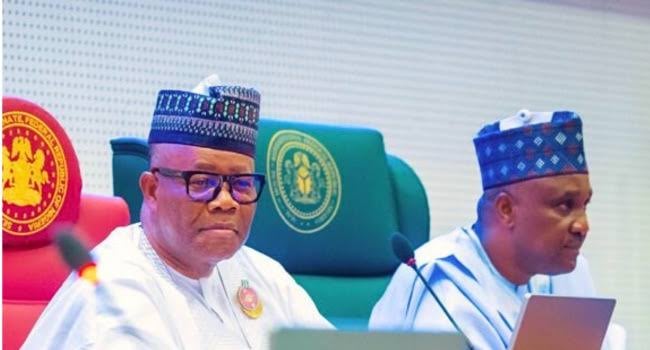
A Federal High Court in Lagos has declared unlawful the National Assembly's N110 billion expenditure on vehicles and support allowances for lawmakers, ruling that the spending violated procurement laws, constitutional provisions, and principles of transparency and accountability.
Delivering judgment on May 6, 2026, Justice Yellim Bogoro held that the allocation of N40 billion for the purchase of 465 vehicles for lawmakers and N70 billion in support allowances for newly elected members of the National Assembly breached the Public Procurement Act, the Code of Conduct for Public Officers, and the oath of office taken by lawmakers.
The suit, marked FHC/L/CS/1606/2023, was filed by the Socio-Economic Rights and Accountability Project (SERAP) in August 2023 against Senate President Godswill Akpabio and Speaker Tajudeen Abbas over the planned expenditure amid Nigeria's worsening economic conditions.
Justice Bogoro described the spending as arbitrary, disproportionate, and inconsistent with statutory procurement standards. He noted that lawmakers who approved the expenditure were also direct beneficiaries, creating a clear conflict of interest.
According to the court, the arrangement amounted to self-dealing, as it conferred financial and material benefits on the same officials responsible for authorising the spending.
The judge further held that the allocation failed to align with national priorities at a time when many Nigerians were grappling with economic hardship.
Rejecting the defendants' argument that the court lacked jurisdiction because of legislative autonomy, Justice Bogoro stressed that the doctrine of separation of powers could not be used as a shield for unlawful conduct. He maintained that the court's concern was the legality and constitutionality of the expenditure.
The court also found that the National Assembly failed to provide evidence demonstrating compliance with procurement procedures, including competitive bidding requirements and value-for-money assessments.
In affirming SERAP's legal standing to institute the suit, the judge noted that public interest litigation empowers civil society organisations to seek judicial intervention in matters affecting the public interest.
Justice Bogoro further ruled that the case was not merely academic, despite the funds having already been spent, explaining that courts retain the authority to grant declaratory reliefs even after a challenged action has been completed.
Consequently, the court declared both the N40 billion vehicle procurement programme and the N70 billion support allowance scheme unconstitutional and unlawful.
The court also directed the National Assembly to ensure that all future procurement processes and public expenditures strictly adhere to due process, transparency, accountability, and value-for-money principles.
Reacting to the judgment, SERAP Deputy Director Kolawole Oluwadare described the ruling as a major victory for transparency, accountability, and prudent management of public resources. He urged the leadership of the National Assembly to comply with the decision, saying it would strengthen the rule of law and restore public confidence in governance.
Human rights lawyer Femi Falana (SAN) also welcomed the judgment, stating that it reaffirmed the principle that public funds must be used in the public interest. He called on the Revenue Mobilisation Allocation and Fiscal Commission to exercise its constitutional mandate over lawmakers' salaries and allowances and urged the National Assembly to obey the court's decision.
Falana added that reducing wasteful public spending would free up resources for critical sectors such as security, intelligence gathering, law enforcement, and social welfare programmes.