Atiku Challenges Tinubu to Free el-Rufai
Atiku Challenges Tinubu to Free el-Rufai
By Divine Macaulay ·
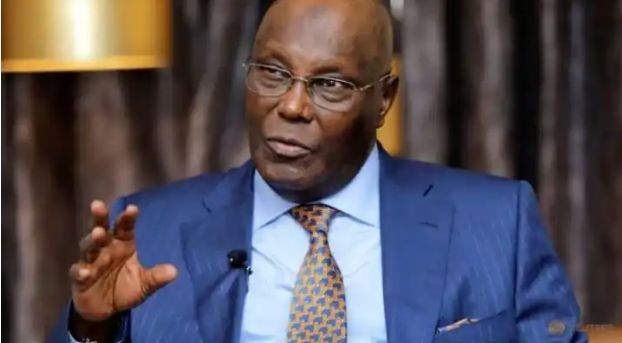
El-Rufai has been in ICPC custody since February 19 over alleged financial impropriety during his tenure as Kaduna governor between 2015 and 2023.
Atiku Abubakar, presidential candidate of the African Democratic Congress (ADC), has challenged President Bola Tinubu to direct the Independent Corrupt Practices and Other Related Offences Commission (ICPC) to release former Kaduna State governor, Nasir el-Rufai, if the President has operational control over anti-corruption agencies.
El-Rufai has been in ICPC custody since February 19 over alleged financial impropriety during his tenure as Kaduna governor between 2015 and 2023.
The former governor was arraigned by the ICPC on April 13 before the Kaduna State High Court on an amended nine-count charge bordering on alleged fraud and abuse of office.
Atiku’s challenge followed Tinubu’s directive to the Economic and Financial Crimes Commission (EFCC) to return to court and vacate an order freezing the bank accounts of the Osun State Government.
Tinubu, who issued the directive on Thursday, said the EFCC acted within its statutory powers but considered the timing of the action—days before the August 15 governorship election—inappropriate.
However, Atiku, through his Senior Special Assistant on Public Communication, Phrank Shaibu, said the President’s intervention had exposed what he described as the “myth” of the operational independence of Nigeria’s anti-graft agencies.
‘Tinubu Can’t Have It Both Ways’
The former vice-president questioned the President’s claim that the EFCC had obtained a court order before freezing the Osun government’s accounts.
Atiku noted that the EFCC, in its explanation of the action, did not mention any court order.
“President Tinubu’s statement has raised more questions than it has answered,” Atiku said.
He argued that Tinubu could not claim to be detached from the operations of the EFCC while simultaneously directing the commission to discontinue its action.
“If the EFCC promptly complies with that directive, then Nigerians have before them undeniable proof that the commission is not as operationally independent as the President wants the country to believe,” he said.
Atiku maintained that the President could not invoke executive authority when politically convenient and rely on the independence of anti-corruption agencies when it suited the Presidency.
‘Release El-Rufai’
Against this backdrop, Atiku challenged Tinubu to apply the same authority to the ICPC and order the release of el-Rufai.
He said the President’s intervention in the Osun account matter had created a constitutional and moral obligation that should not be applied selectively.
“Having now demonstrated that he can issue direct operational directives to anti-corruption agencies whenever he considers it expedient, President Tinubu owes Nigerians an explanation as to why he cannot exercise the same authority in the case of Mallam Nasir El-Rufai,” he said.
“If he can direct the EFCC to discontinue its action today, then he cannot pretend to be powerless over the actions of the ICPC tomorrow.
“Executive power cannot be invoked selectively for political convenience while institutional independence is cited only when it suits the Presidency.”
Atiku said the credibility of Nigeria’s anti-corruption institutions and respect for the rule of law were at stake.
He acknowledged that reversing the freeze on the Osun government’s accounts could ease political tension ahead of the governorship election, but said it failed to address questions surrounding the decision to freeze the accounts in the first place.
“The unanswered questions remain: who authorised the freezing of the account of an opposition-controlled state just days before a governorship election, and why was such an extraordinary action taken at such a politically sensitive moment?” Atiku asked.