2027: La’ah’s Risky Road to Kaduna Govt House
The 2027 Kaduna governorship race is gradually becoming a contest of political calculations, bruised ambitions, shifting alliances and competing claims over who truly represents the interests of Southern Kaduna.
By ISRAEL BULUS ·
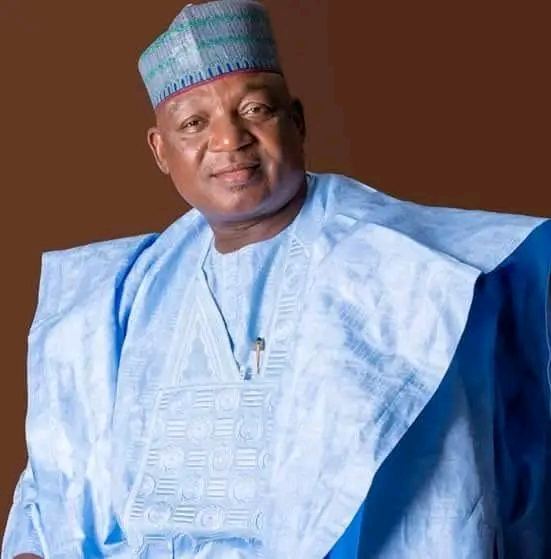
The 2027 Kaduna governorship race is gradually becoming a contest of political calculations, bruised ambitions, shifting alliances and competing claims over who truly represents the interests of Southern Kaduna.
At the centre of the unfolding drama was a former two-term Kaduna South Senator, Danjuma La’ah, who has reportedly thrown his hat into the governorship contest on the platform of the National Democratic Congress (NDC), following his fallout with the All Progressives Congress (APC) after the Kaduna South senatorial primary. His decision is bold, but equally risky.
La’ah is moving from familiar political terrain into one of the toughest contests in Nigerian politics, the race for a state governorship seat. The question is whether his ambition represents a carefully calculated political strategy or a gamble triggered by the outcome of the APC senatorial primary.
La’ah was not alone in protesting the outcome of the controversial primary. Engineer Mikel Auta was also in the same camp, but while La’ah chose the exit door, Auta chose reconciliation.
Auta returned to the APC fold, made peace with the Kaduna State Government and pledged his support to the party. Two politicians who stood on the same side of a political dispute have therefore chosen different roads. One is challenging the establishment from outside; the other has chosen to remain within the system. The 2027 election will determine which strategy was wiser.
THE GOVERNORSHIP IS A BATTLEFIELD
For La’ah, perhaps the biggest challenge is not his ambition but the political structure required to actualise it. Governorship elections are rarely won by popularity alone. They require personal appeal, organisation, funding, grassroots mobilisation, alliances and, most importantly, a structure capable of delivering votes across wards and polling units.
This is where La’ah’s journey to Kaduna Government House becomes particularly difficult. Where are the lawmakers? Where are the local government chairmen? Where are the State Assembly members, National Assembly members and influential political stakeholders capable of transforming personal popularity into a statewide electoral machine?
If most of these actors remain within the ruling party, La’ah has a mountain to climb. Of course, political officeholders do not own voters.
A politician can defect while supporters remain behind, just as a candidate without many political officeholders can still win. But structure matters. Personal popularity is one thing; electoral machinery is another. The real question is whether La’ah’s political capital is strong enough to compensate for whatever structural disadvantage he may face.
The Jerry Adams Factor
Governor Uba Sani’s choice of Jerry Adams, a prominent figure from Southern Kaduna, has introduced another significant dimension into the 2027 political calculation.
Adams’ emergence has reportedly generated considerable excitement in parts of Southern Kaduna and strengthened the perception that the APC is deliberately positioning itself to consolidate support in the region.
Beyond the immediate electoral calculation, however, the nomination carries a deeper political symbolism.
For observers, the choice of Adams represents an attempt by Governor Uba Sani to promote what they describe as a politics of inclusion, accommodation and broader representation in a state with deep religious, ethnic and regional fault lines.
His emergence also marks a notable departure from the controversial Muslim-Muslim ticket adopted during the administration of former Governor Nasir El-Rufai.
While the former arrangement generated considerable debate and criticism, particularly among sections of Southern Kaduna and Christian communities, Uba Sani’s decision to pair with a Christian from Southern Kaduna could be interpreted as an effort to broaden the political coalition around his administration.
Some observers have consequently described the development as evidence that Uba Sani is deliberately prioritising inclusiveness in his political calculations. They also argue that his administration represents a significant variation from that of his predecessor, particularly in its engagement with Southern Kaduna.
The El-Rufai administration was frequently criticised by sections of Southern Kaduna over allegations of political marginalisation, perceived disregard for the region’s concerns and what critics considered an insensitive approach to some of its longstanding grievances.
Uba Sani, by contrast, has sought to project a more conciliatory posture, with greater emphasis on political accommodation and engagement across regional and religious divides.
Whether that change in approach will ultimately translate into lasting political goodwill remains a matter for voters to determine.
But politically, the symbolism of Jerry Adams cannot be ignored. For the APC, the nomination provides an opportunity to make a broader argument: that Southern Kaduna is not merely an electoral constituency to be courted during elections but a critical component of the state’s governing arrangement.
The message is straightforward: Southern Kaduna has a seat at the table. That could significantly complicate La’ah’s political calculations. La’ah is attempting to build an opposition campaign around his personal political identity, record and relationship with Southern Kaduna voters, while the APC possesses the advantages of incumbency, government machinery, elected officials and an established political structure.
With Jerry Adams potentially serving as a rallying point for sections of Southern Kaduna, the ruling party has acquired an additional political asset in a region that has historically played a crucial role in Kaduna’s electoral arithmetic. The question, however, is whether political symbolism will translate into votes.
THE KASHIM SHETTIMA QUESTION
Another issue adding intrigue to La’ah’s political journey is the reported intervention by Vice President Kashim Shettima.
According to accounts surrounding the political crisis, La’ah was asked to drop his senatorial ambition, while the Vice President reportedly offered him the prospect of a federal appointment.
La’ah reportedly declined and chose the governorship route. Was that the right decision? Only history can answer. A federal appointment would not have guaranteed a political future, just as accepting such an offer would not automatically have secured La’ah a Senate seat.
However, remaining within the national political establishment could have given him continued access to power, influence and resources, potentially allowing him to advance issues affecting Southern Kaduna while rebuilding his political base.
Instead, he chose the more difficult route: moving from a Senate ambition to a governorship bid on an opposition platform. That is not merely a change of office; it is a fundamental change of political strategy, and every major political gamble comes with consequences.
WHAT IF LA’AH LOSES?
This is perhaps the most uncomfortable question surrounding the 2027 ambition. If La’ah wins, his decision will be celebrated as courage. His departure from the ruling party will be interpreted as conviction, while his refusal to compromise will be remembered as political bravery. But what happens if he loses?
He could lose the governorship, the opportunity to remain within the ruling political structure and possibly the political trajectory that originally brought him into the latest battle. More importantly, he could find himself outside a political structure with significant influence over Kaduna State and the Federal Government. By the next political cycle, rebuilding that influence could prove difficult. That is the danger of political isolation.
Yet, it would be premature to write La’ah off. Politics is unpredictable. Structures collapse, alliances change, new movements emerge and voters sometimes defy the calculations of political elites.
La’ah’s personal followers should therefore not be underestimated. The question is whether that following is sufficiently broad, organised and strategically deployed to produce a winning coalition across Kaduna State. That is the real test.
SOUTHERN KADUNA MUST LOOK BEYOND PERSONALITIES
For Southern Kaduna, the 2027 debate should not be reduced to La’ah versus Uba Sani, La’ah versus Jerry Adams or APC versus NDC.
The region must ask a bigger question: What political strategy best serves the interests of Southern Kaduna? Is it better to support a familiar politician outside the ruling structure? Is it better to remain within the governing party and negotiate from a position of influence? Or should Southern Kaduna simply support whichever candidate offers the most credible pathway to development, representation, security and political influence?
These questions are bigger than any politician. Southern Kaduna must not allow emotional political loyalty to replace strategic political thinking. The region’s electoral value should translate into tangible benefits for its people. The real test of political leadership should therefore not simply be who speaks most passionately about Southern Kaduna, but who can deliver measurable results for its people.
THE BATTLE AHEAD
Senator La’ah has made his choice. Mikel Auta has made his choice. Governor Uba Sani has made his calculation. The APC has strengthened its Southern Kaduna argument with the Jerry Adams factor, while the opposition must now prove that it can transform La’ah’s personal political capital into a formidable statewide electoral structure.
That will not be easy. A governorship contest is significantly different from a senatorial election. It requires a coalition that cuts across Kaduna’s three senatorial districts, 23 local government areas, wards, communities and diverse political interests.
La’ah must therefore answer one critical question: Can his personal political capital become a statewide movement? It is not enough to have loyal supporters; they must be organised. It is not enough to have goodwill; that goodwill must translate into votes. It is not enough to criticise the ruling establishment; the opposition must convince voters that it offers a credible alternative. And it is not enough to invoke Southern Kaduna; the campaign must demonstrate what it intends to deliver to the region and Kaduna State as a whole.
THE POLITICS OF RISK
At the end of the day, politics is not a contest of anger. It is a contest of strategy. It is not enough to ask who is popular; ask who has the structure. It is not enough to ask who suffered a political setback; ask who can build the coalition to win. It is not enough to ask who is fighting for Southern Kaduna; ask what that fight will actually deliver to Southern Kaduna.
La’ah has chosen a risky road to Kaduna Government House. If he succeeds, he will rewrite the political calculations of Kaduna State and prove that personal political capital can overcome the advantages of incumbency and established structures. If he fails, however, the same decision could be remembered as a costly political gamble that weakened rather than strengthened his political relevance.
Perhaps the biggest lesson is an old one: in politics, you do not always have to leave the house because you lost an argument inside it. Sometimes, it is wiser to remain inside, rebuild your influence and fight another day. But politics also rewards those willing to take risks.
La’ah has taken his. The 2027 election will determine whether his road to Kaduna Government House was a courageous journey towards political reinvention—or a risky detour that cost him more than he bargained for.
For now, the road is open. The political dice are rolling. And Kaduna is watching.
Israel Bulus is a Journalist and writes from Kaduna.